
Insights / Digital Marketing
What Are SERPs & How Do They Work? (Plus How to Rank Higher)

You type a question into Google, and in under a second a page appears with ads, a map, a box of quick answers, and a list of websites. That page is called a SERP. Understanding how it’s built is the first step to ranking on it, because you can’t win a game whose scoreboard you don’t understand.
This guide explains what SERPs are, how search engines decide who appears where, and what you can do to improve your position.
What Does SERP Stand For?
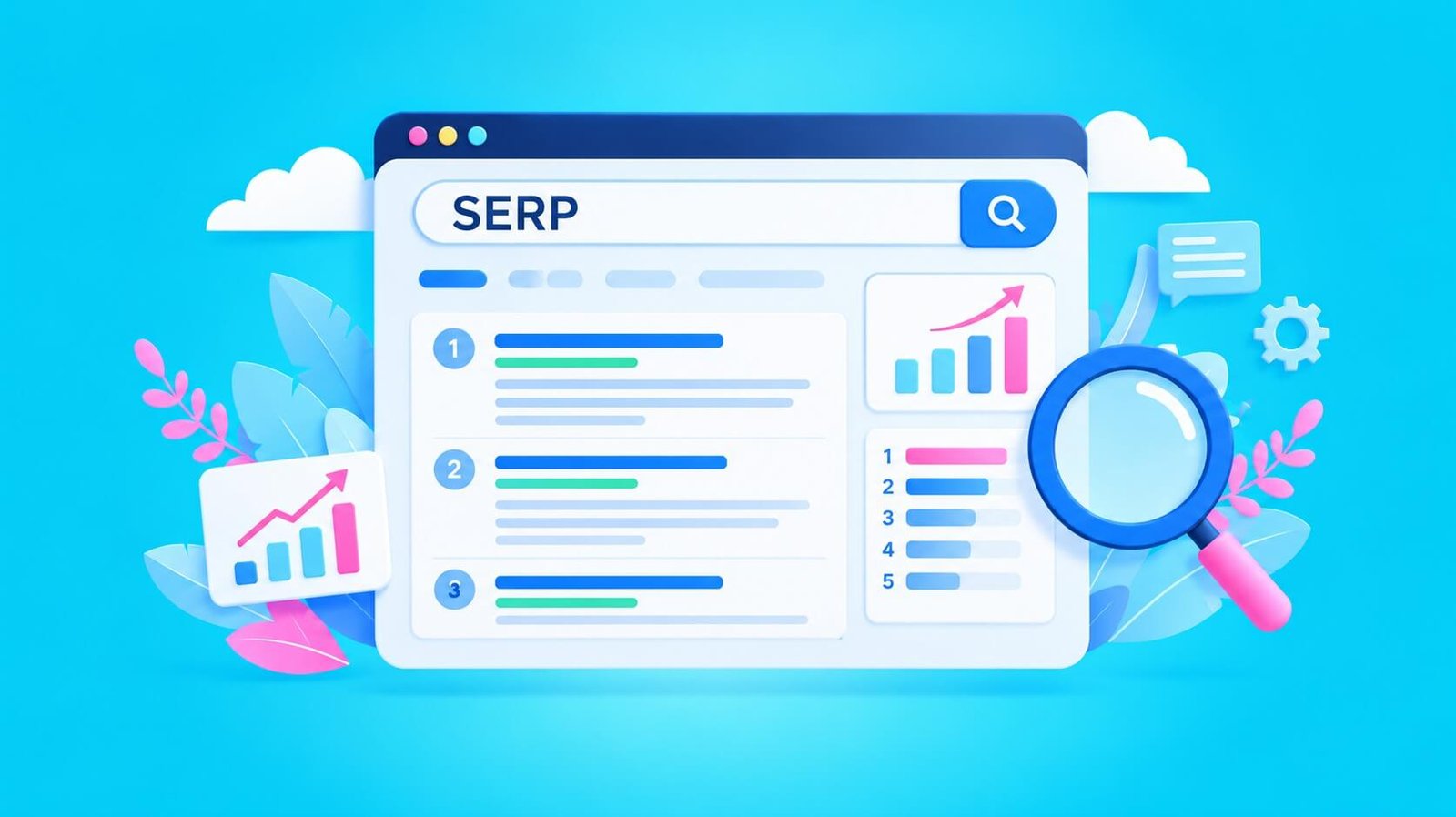
SERP stands for search engine results page. It’s the page a search engine shows after you enter a query. Every search produces its own SERP, and the same keyword can produce different SERPs for different people depending on location, device, language, and search history.
That last point matters for ranking. When someone says “we rank #3 for that keyword,” they mean #3 in the SERP they saw, which may not match what a customer across town sees.
What’s Actually on a SERP?
Years ago, a SERP was ten plain blue links. Today it’s a mix of formats, and which ones appear depends on the query.
- Paid ads. Listings marked “Sponsored,” usually at the top and sometimes at the bottom.
- Organic results. The standard listings, ranked by relevance and quality rather than payment. These are what SEO targets.
- Local pack (map pack). Three businesses with a map, shown for searches with local intent like “dentist near me.”
- Featured snippets. A highlighted answer box pulled from a page that answers the question directly. People sometimes call this “position zero.”
- People Also Ask. Expandable boxes of related questions.
- AI-generated summaries. Overviews that synthesize information from several sources, now common on many informational searches.
- Images, videos, news, and shopping results. These appear when the query suggests that format would help.
- Knowledge panels. Information boxes about well-known businesses, people, or places.
If you want definitions of related terms, our SEO glossary covers them in plain English.
How Do Search Engines Build a SERP?
Search engines work in three broad stages.
- Crawling. Automated bots follow links across the web to discover pages.
- Indexing. The search engine analyzes each page’s content and stores it in a huge database. A page that isn’t indexed can’t appear in results.
- Ranking. When someone searches, the engine scans its index for relevant pages and orders them using many signals. Google doesn’t publish the full list, and it changes constantly,
- Relevance: how closely the content matches what the searcher wants (search intent)
- Content quality: depth, accuracy, originality, and demonstrated experience
- Authority: signals of trust, especially links from other credible sites
- User experience: page speed, mobile-friendliness, and a site that’s easy to use
- Context: location, language, device, and sometimes past behavior
For local searches, proximity, relevance, and prominence carry extra weight. Our beginner’s guide to local SEO shows how that works in practice.
How Page Ranking in SEO Actually Works
Page ranking in SEO is the position a specific URL holds in the results for a specific query. Ranking is per page and per keyword, not per website. Your homepage might rank first for your brand name while a service page sits on page three for a competitive term.
A few facts about ranking are worth knowing:
- Position matters enormously. Studies consistently show the top few results get the large majority of clicks, and clicks fall sharply after page one. The exact share varies by query and SERP layout, so treat any single percentage with caution.
- SERP features push organic results down. Ads, a map pack, and an AI summary can mean your #1 organic listing sits well below the top of the screen.
- Rankings move. Algorithm updates, competitor changes, and your own edits all shift positions, sometimes daily.
What Does “SEO Position” Mean? (And the “Full Form” Question)
People searching “SEO position full form” are usually asking one of two things. SEO itself stands for search engine optimization. “Position” simply means where a page appears in the results: position 1 is the first organic result, position 10 is usually the last on page one, and so on.
Rank-tracking tools typically report positions out to around 100. If you’ve seen phrases like “99 positions” in tool reports or discussions, that likely refers to how far down the results a tracker is reporting, though the exact meaning depends on the tool. In practice, pages past the first couple of pages rarely get meaningful traffic, so the positions worth working on are the top ten and the positions just below them.
How to Increase Your SEO Ranking
If you’re asking how do I increase my SEO ranking, the honest answer is that there’s no single lever. The best way to improve search engine ranking is with a combination of relevance, quality, and authority, applied to pages that match what searchers want. Here are the tactics that consistently work.
1. Match Search Intent First
Search the keyword you’re targeting and study the first page. Are the top results guides, product pages, comparisons, or local businesses? Your page needs to be the same kind of page. Many ranking problems are really intent problems, and no amount of link building fixes a mismatch.
2. Improve Your Content, Not Just Your Tags
Make your page the most useful answer available. Cover the subtopics that top-ranking pages cover, answer questions clearly and early, keep facts current, and add something original, such as real examples or first-hand experience. Our guide to writing SEO-optimized content goes deeper.
3. Tighten the On-Page Basics
Check your title tag, headings, meta description, URL, image alt text, and internal links. These are quick improvements that help search engines and searchers understand the page. Our on-page SEO checklist walks through every item.
4. Fix Technical Problems
A page that can’t be crawled, loads slowly, or breaks on mobile will struggle regardless of its content. Check indexing status and Core Web Vitals in Google Search Console and PageSpeed Insights.
5. Build Authority With Quality Links
Links from relevant, credible sites remain a strong signal. Focus on earning them through useful resources, partnerships, local press, and outreach rather than buying them. We cover the safe methods in our guide to building quality backlinks.
6. Strengthen Local Signals (If You Serve a Local Area)
Complete your Google Business Profile, keep your name, address, and phone number consistent everywhere, and collect reviews steadily. For local queries, these often matter as much as your website.
7. Win SERP Features, Not Just Rankings
You can sometimes earn visibility without being #1:
- Featured snippets: answer a specific question in a concise paragraph, list, or table near the top of a section
- People Also Ask: include and answer related questions on your page
- Rich results: add structured data where it fits
- Local pack: optimize your Google Business Profile and reviews
8. Improve Click-Through Rate
Ranking is only half of it, because you also need the click. In Search Console, find pages with plenty of impressions but few clicks, then rewrite the title and meta description to be clearer and more compelling. This is one of the fastest wins for pages that already rank.
9. Refresh Older Content
Pages decay. If a page that once performed well has slipped, update it with current information, better structure, and any missing subtopics, rather than just changing the date.
How Long Does a Ranking Increase Take?
For SEO ranking increase efforts, expect weeks to months, not days. Small changes to titles and content can show movement within a few weeks once search engines recrawl the page, while authority-building work such as links and new content usually takes several months. Competitive keywords take longer than niche or local ones. Anyone promising a specific position by a specific date isn’t being straight with you, since nobody controls Google’s results.
How to Check Where You Rank
- Google Search Console (free): shows average position for each query and page, along with impressions and clicks. Averages are useful for trends, though they don’t capture what any individual searcher saw.
- Rank-tracking tools: paid platforms and some limited free options check positions for chosen keywords over time. Our roundup of free SEO resources and tools lists some options.
- Manual checks: searching in a private window gives a rough picture, but results are still influenced by your location and device, so don’t rely on this alone.
Track trends rather than daily numbers, since small fluctuations are normal.
Common Mistakes When Trying to Rank Higher
- Chasing rankings for keywords that don’t bring customers. A top spot for an irrelevant term earns nothing.
- Ignoring SERP layout. If the results page is dominated by ads and a map pack, a blog post may never get the clicks you expect.
- Over-optimizing. Stuffing keywords or forcing links usually backfires.
- Changing too many things at once, which makes it hard to tell what worked.
- Checking rankings obsessively instead of tracking leads and revenue.
- Giving up too early. SEO compounds, and most gains show up gradually.
Frequently Asked Questions
Search engine results page, the page shown after a search.
Not quite. A SERP is the whole page, and a search result is one listing on it.
No. Ads appear in their own paid spots, and paying for them doesn’t change your organic ranking.
Location, device, language, and search history all influence results, which is why local businesses in particular can see different rankings across neighborhoods.
Improve content depth and intent match, tighten the title and headings, add relevant internal links, and refresh outdated information. These changes often move a page onto page one faster than building a new one.
Putting It Together
A SERP is a mix of ads, organic listings, maps, snippets, and AI summaries, and ranking well means understanding which of those matter for your keywords. Start by matching search intent, then improve the page itself, fix technical issues, build authority, and track progress with Search Console. Once the basics are in place, look for chances to win SERP features and improve click-through rate on pages that already rank.
If you’d like a clear picture of where your pages currently stand and what would move them up fastest, Market RiseUp offers a free SEO audit with a prioritized action plan for your site.

Miftahul Islam is an SEO professional and digital marketing strategist with 10+ years of experience in technical SEO, content strategy, link building, and organic search growth. He is the founder of Market Riseup, where he researches emerging search trends and helps businesses build sustainable digital visibility.



Services
Get In Touch
USA Office:
909 N Madison St, Madisonville, Texas, 77864
Bangladesh Office:
Haider Plaza, Dariapur, Gaibandha, 5700
©2026 Market Riseup All Rights Reserved.