
Insights / Digital Marketing
SEO vs. SEM: What's the Difference and Which Do You Need?

If you’ve been getting pitched by marketing agencies, you’ve probably heard both terms thrown around like they’re interchangeable — sometimes even by the agencies themselves. They’re not the same thing, and understanding the difference between seo and sem is the first step to figuring out where your marketing budget should actually go.
Here’s the difference between SEO and SEM, explained clearly, with real examples of when each one makes sense for a small business.
The Short Answer: SEM Is the Umbrella, SEO Is Part of It
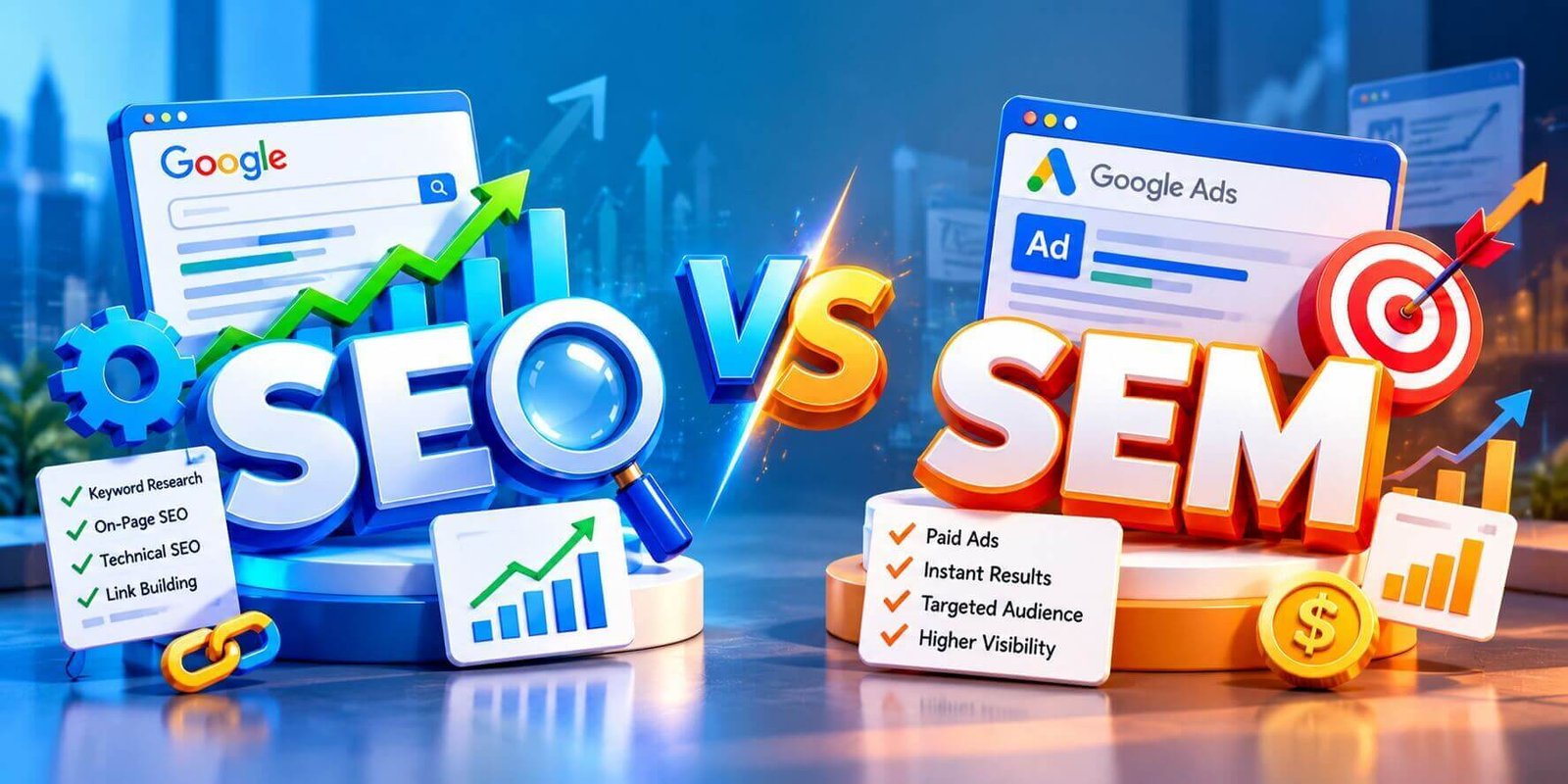
The cleanest way to describe the difference between SEO search marketing and sponsored search is this: SEM (search engine marketing) is the broad category covering all strategies used to gain visibility in search engines — both paid and unpaid. SEO (search engine optimization) is the unpaid, organic side of that category.
So technically, SEO is a subset of SEM, not a separate thing entirely. In practice, though, most people use “SEM” to mean specifically the paid side — running ads through platforms like Google Ads that appear at the top of search results, marked “Sponsored.”
That’s the usage this guide follows, since it’s how the term is used in almost every real business conversation, even if it’s not technically precise.
What SEO Actually Involves
SEO is the process of improving your website so it ranks higher in the unpaid, organic search results — the listings below the ads, based purely on relevance and authority as determined by Google’s algorithm.
Key characteristics
- No direct cost per click — you don't pay Google when someone clicks your organic listing
- Takes time — typically months, not days, to see meaningful results
- Compounds over time — a well-optimized page can keep ranking and driving traffic for years with minimal ongoing investment
- Requires ongoing effort — content, technical maintenance, and link building all need consistent attention
What SEM (Paid Search) Actually Involves
SEM, in the narrower sense most people mean, refers to paid advertising within search engines — bidding on keywords so your ad appears at the top of the results page when someone searches a relevant term.
Key characteristics:
- You pay per click (or sometimes per impression), regardless of whether that click converts
- Results are immediate — your ad can appear the same day you launch a campaign
- Traffic stops when you stop paying — unlike SEO, there's no lasting asset once the budget runs out
- Highly controllable — you can target specific keywords, locations, times of day, and audiences with precision
SEO vs. SEM, Side by Side
| SEO | SEM (Paid Search) | |
|---|---|---|
| Cost structure | No cost per click; investment is time/content/effort | Pay per click or impression |
| Time to results | Months | Immediate |
| Longevity | Long-term, compounding | Stops when budget stops |
| Trust factor | Often seen as more credible by searchers | Clearly marked as an ad |
| Control | Less direct control over exact ranking | Highly controllable targeting |
| Best for | Sustainable, long-term visibility | Immediate visibility, testing, time-sensitive offers |
A Real Example
Imagine two local bakeries. Bakery A has invested in SEO for the past year — optimized service pages, a blog answering common baking questions, and a strong Google Business Profile. Bakery B just opened and is running Google Ads for “custom birthday cakes [city].”
Search “custom birthday cakes [city]” today, and Bakery B’s ad might appear first, clearly marked as sponsored, because they’re paying for that placement. Bakery A might appear just below in the organic results, earned through months of consistent SEO work — no ongoing per-click cost.
This is the core sem vs seo difference search engine marketing optimization comes down to in practice: SEM buys visibility, SEO earns it.
Which One Does Your Business Actually Need?
For most small businesses, this isn’t really an either/or decision — it’s a question of sequencing and budget allocation.
Lean toward SEO first if:
- You're playing a long game and can invest time before expecting results
- Your budget is limited and needs to work sustainably over time
- You're in a less competitive market where organic ranking is achievable within a reasonable timeframe
Lean toward SEM (paid search) first if:
- You need visibility immediately — a new business, a time-sensitive promotion, a seasonal push
- You want to test which keywords and messaging actually convert before investing in long-term SEO content around them
- You're in an extremely competitive market where organic ranking could take a year or more to become meaningful
Use both together if:
- You have the budget to run paid ads while your SEO strategy builds momentum in the background
- You want immediate visibility now, with a plan to reduce ad spend as organic rankings improve
- You're launching something new and want data from paid campaigns to inform your SEO keyword strategy
The Data-Sharing Advantage of Running Both
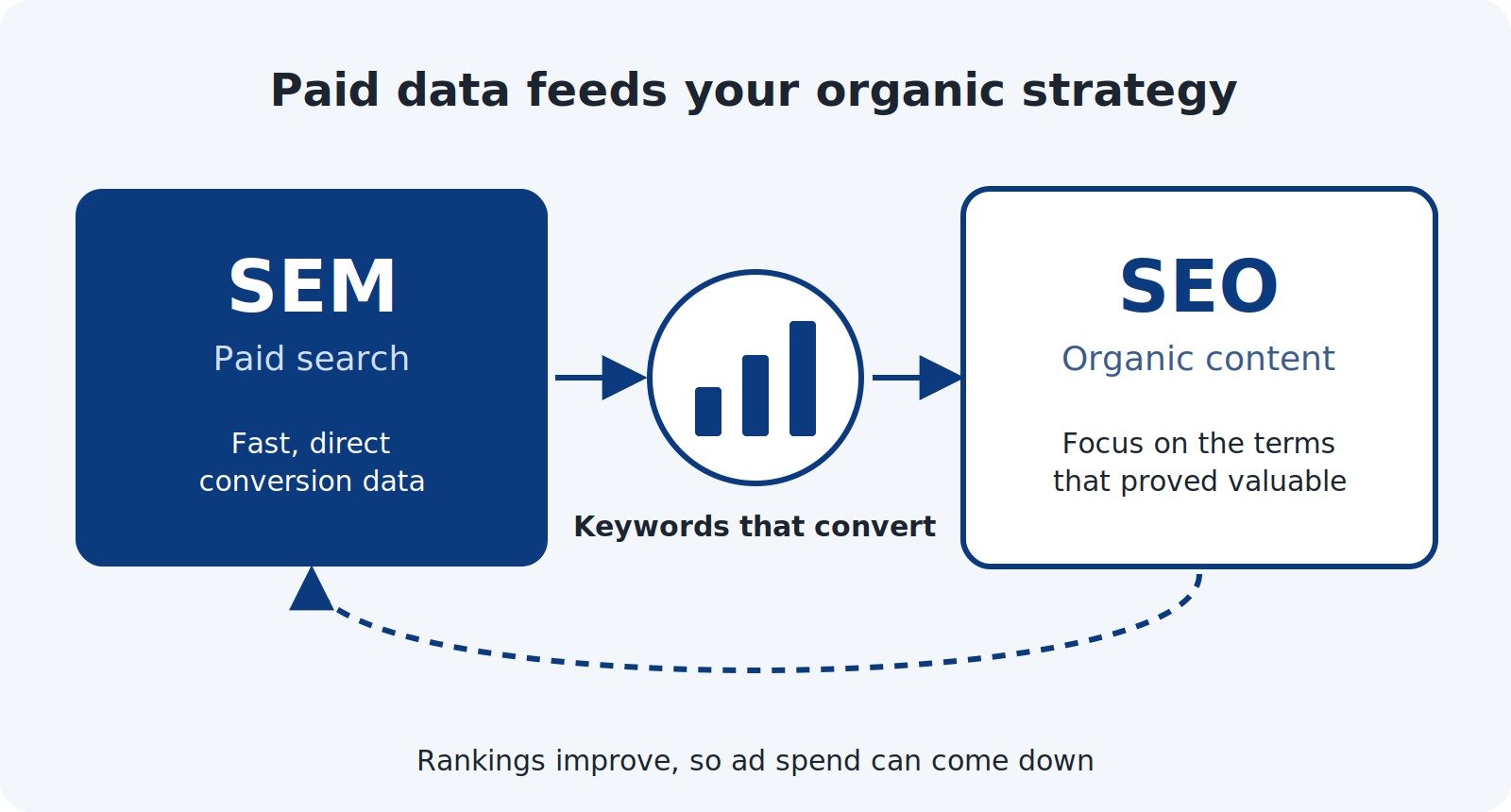
One underrated benefit of running SEO and SEM together: paid search gives you fast, direct data on which keywords actually convert into leads or sales — data SEO alone takes much longer to generate. Smart businesses often use paid campaigns to test keyword performance quickly, then prioritize their SEO content strategy around the terms that proved most valuable.
Common Misconceptions
"SEO is free."
Not quite — it doesn’t have a per-click cost, but it requires real investment in time, content creation, and often professional help. “Free” undersells the actual effort involved
"Paid ads are a waste of money since people skip ads."
Some searchers do avoid clicking obvious ads, but paid search still captures a large share of clicks, especially for high-intent, ready-to-buy searches. Dismissing it entirely usually isn’t the right call for a business that needs faster results.
"You should only ever do one or the other."
As covered above, this is rarely true in practice — most businesses benefit from at least starting one while planning for the other, particularly service businesses with clear busy and slow seasons.
Making the Decision for Your Business
There’s no universal right answer — the right mix depends on your timeline, budget, and competitive landscape. A new business with limited cash flow and an urgent need for customers often leans toward paid search initially, while a more established business with room to invest in a long-term asset benefits more from prioritizing SEO.
If you’re not sure which makes more sense for your specific situation, Market RiseUp offers a free consultation to walk through your goals, budget, and market — and help you build a realistic plan for both.

Miftahul Islam is an SEO professional and digital marketing strategist with 10+ years of experience in technical SEO, content strategy, link building, and organic search growth. He is the founder of Market Riseup, where he researches emerging search trends and helps businesses build sustainable digital visibility.

Services
Get In Touch
USA Office:
909 N Madison St, Madisonville, Texas, 77864
Bangladesh Office:
Haider Plaza, Dariapur, Gaibandha, 5700
©2026 Market Riseup All Rights Reserved.